 शुक्रबार, १९ मंसिर २०८२
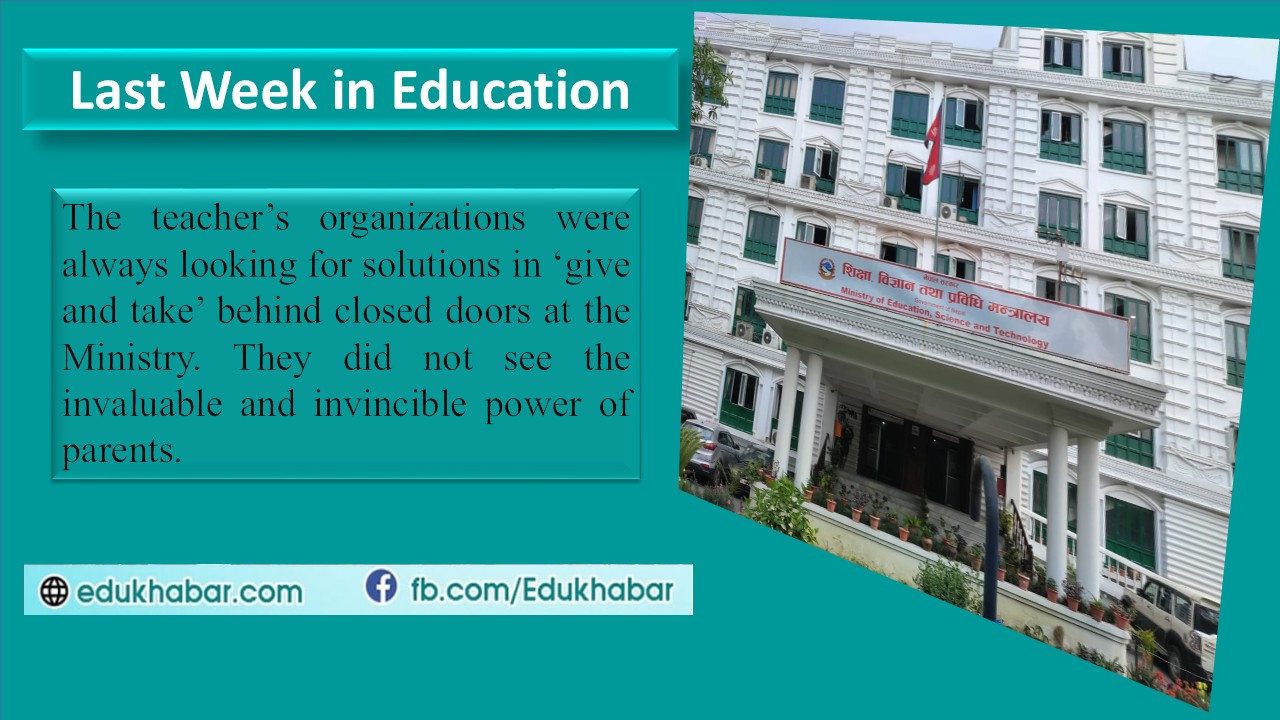
The media gave priority to the meeting between the Minister of Education and the Teachers' Federation last week.
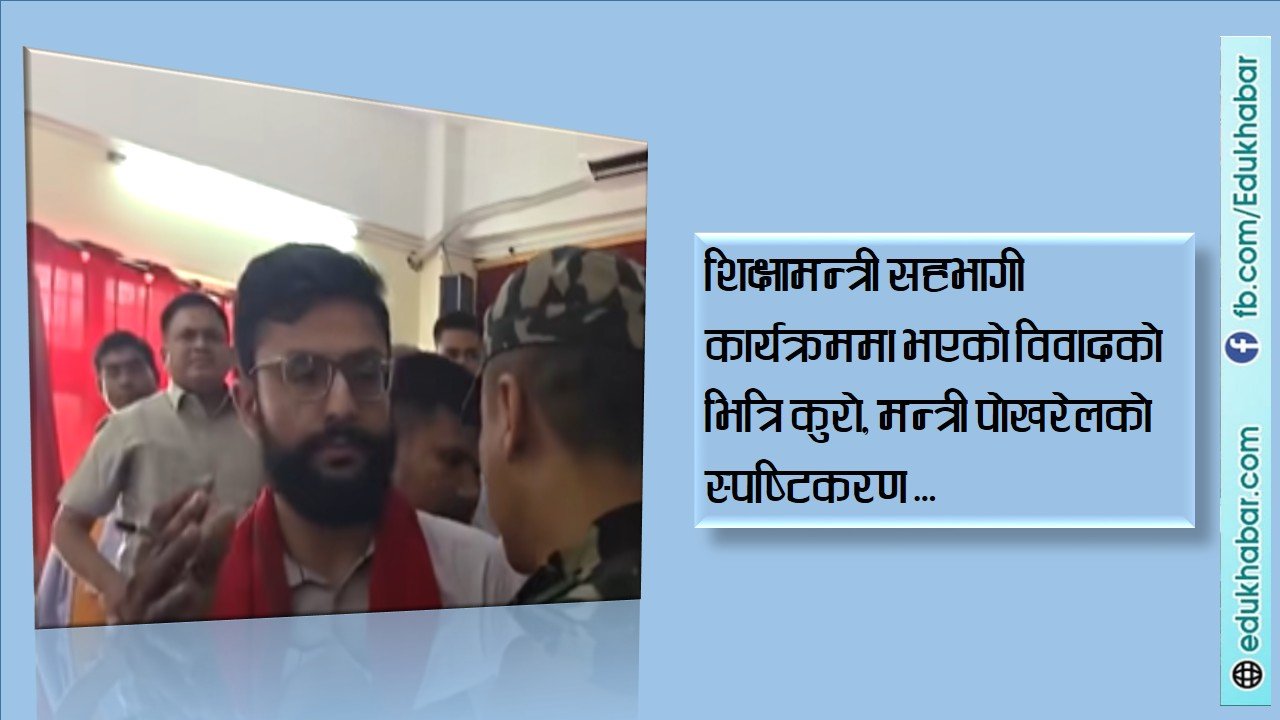
Kathmandu - Minister for Education, Science and Technology (MoEST) Mahabir Pun has stated that the nine-point agreement reached between the Nepal Teachers Federation and the then Government on April 30, 2025 cannot be implemented due to lack of budget allocation, there was the news. After the ‘Understanding’ was passed by the then Cabinet led by KP Oli, the Nepal Teachers Federation called off its 29-day Kathmandu-centered protest. Since the then Oli government did not allocated a budget for the implementation of the 'Understanding', it was certain that the Understanding would not be implemented. Federation President Laxmi Kishore Subedi has said to the media that legal action will be taken if the decision made by the Cabinet is not implemented in response of Minister's that statement, while the Federation's team went to the minister to make pressure to implement the ‘Understanding’, the news quoted. Mr. Subedi told the media that the Minister had brought a proposal to scrap the 'Understanding'.
The Teachers Transfer Victims' Struggle Committee has announced to hold a protest from the last week of November demanding the repeal of the teacher transfer directive, the news came. If the teacher transfer directive which was issued on June 5, 2025 by the then MoEST Sumana Shrestha was not revoked or amended, warned that they would go on a hunger strike until death, the news mentioned. The Committee claims that 42,000 new teachers have been affected by this directive.
It is seen that all political parties are focusing on creating employment opportunities for their cadres in public education system rather than improving the public education. Instead of appointing competitive teachers through the Teachers Service Commission (TSC), in the name of meeting immediate needs adopting a shortcut (measure) of recruiting cadres, many types of teachers have been appointed in schools from the past. This has resulted in the denial of the right of millions of children to learn from qualified teachers.
The problem has been compounded by the fact that previous governments agreed any demands so that teachers went immediately back to the classroom. Teachers have been used by the parties or state as a political weapon rather than focusing on professional quality, (even the Panchayat during the Panchayat era). The latest example is the coalition government of Mr Oli that agreed to meet teachers’ demands to put aside the protests but did not allocate budget to implement the agreed-upon issues.
In reality, the Teachers' Union is a shadow of the coalition of parties. It is natural that its strength will decrease as the public voice against the party is strong. Had the source of strength came from duty or professional responsibility, Minister Pun could not have said so - neither politically nor morally. Unless teachers can stand on the strength of parents that comes from their dutiful attitude, they will continue to remain puppets. The teacher’s organizations were always looking for solutions in ‘give and take’ behind closed doors at the Ministry.
They did not see the invaluable and invincible power of parents. They didn't understand politics in the real sense. They haven't even spoken out audibly in favor of public schools, the source of their strength. It is certain that as long as private schools are determining factors, teachers will have no value. Intelligence of teachers has limited to make demands.
Of course, not all teachers are like that but they are also having to carry the burden of the sins of the previous generation of teachers. This is the best time to take a new way. If the teachers want, there may be a situation where parents will come to the streets to help teachers, while the teacher remains in the classroom.
The current reality is that only a politically stable government can address the problems of teachers. Only after the state's vision for public education is clear will the specific problems of teachers be resolved in the long term. Is it the teacher leaders' understanding that the Government formed on the foundation of the Gen-Z revolt can resolve the problems of teachers that have been entrenched for years, or is it a strategy to maintain their presence?
Public education activists suspect that the teachers' organizations, which are active as sister organizations of the parties, threatening to go to court demanding the implementation of old agreements are might be an instigation of the parties. The rise of the Gen-Z revolt was also fueled by the inaction of teachers. Gen Z lacks political and broader social understanding, and is not expressed due to the limitations of their own educational and other backgrounds.
At this time, public school teachers should be able to acknowledge their part in this discontent and come forward to say that our products are not in the vandalism. If 2-3 thousand guardians in Kathmandu and 2-3 hundred guardians in each municipality office to protest, even the current government will come to agreement. This will become a 2.0 part of the Gen-Z movement.
The samiliar thing is seen in teacher transfers. The Teachers Service Commission allows schools to be selected based on the merit list of the candidates who passed the exam. The teachers at the bottom of the qualification scale have to go schools in more remote areas. It was the practice that teachers try to be transferred after completing their probation period through various means, including political pressure. It has also been learned that in some cases, political parties from the school management committee to the district and ministerial levels are involved in financial manipulation. It is known that newly appointed teachers are dissatisfied with the latest teacher transfer guidelines, which prevent some from being transferred for years due to lack of political access and others from being transferred after probation period. Attempts are being made to change the Directives with a threat of protests. If the Teacher Transfer Directive need to be reconsidered, it should be based on the needs of the state, not on the influence of a specific group or party.
Normally, a teacher who wants to teach does not insist on being transferred. A teacher who is passionate about teaching has a relationship with students (and parents), and no one wants to change that relationship under normal circumstances. Currently, public schools have become teachers’ employment centres to pay fees for their children in private schools. A day will come when parents and teachers will understand each other's plight and come to an agreement for each other's well-being.
There are many parents who work harder to send their children to private schools. If public schools had given results, wouldn't those parents have sought easier option? Who else if not teachers can start creating such an environment? It doesn't mean that teachers don't have the right to be transferred. They can teach in another place, but also get exposures to many other places besides another school.
Addressing the Tribhuvan University (TU) Assembly, Chancellor Prime Minister Sushila Karki said that universities should make themselves self-reliant by utilizing their own structures and capabilities, rather than relying solely on government grants, there was the news. In the assembly, Karki stated that she is in favor of making universities autonomous as one Prime Minister cannot carry the burden of all universities, quoted the news.
TU plans to allow Nepalis living abroad to study online through its affiliated campuses, the news published. In its annual policy and program, TU has proposed a program that allows students to earn academic degrees while living abroad by taking exams in collaboration with Nepali Embassies, mentioned the news. In the policy and program presented by TU Vice-Chancellor Prof. Dr. Deepak Aryal, it has been proposed to establish TU’s branch in Pokhara so that students from the region do not have to come to Kathmandu to receive services.
MoEST Mahavir Pun stated that a clear basis and process should be determined for the appointment of the Vice-Chancellor not based on political affiliation but on the basis of merit, ability, reputation, and national and international image, the news came.
J.B. Bishwakarma wrote in Kantipur that universities and the academic sector cannot represent social reality unless they are structurally inclusive in line with the social fabric.
Minister Pun expressed dissatisfaction over the delay in publishing university results compared to Plus Two and SEE, quoted in the news.
There was report that the Department of Consular Services under the Ministry of Foreign Affairs has started collecting details of Nepali students who have been defrauded by educational institutions in the United Arab Emirates (UAE).
According to a news published in Gorkhapatra, since foreigners on student visas were found to have engaged in illegal activities, the Immigration Department has deported few of them back to their home countries and warned educational institutions not to admit others.
The National Examination board has not yet implemented the directive given by the Ministry of Education to implement the Council of Ministers’ decision on March 16, 2022 to remove the provision that students must be 14 years of age to participate in the Grade 10 SEE examination from 2022, the news published.
The Commission to Investigate the Abuse of Authority (CIAA) has filed a case against four people in a special court for allegedly making false statements and making recommendations to the TU Examination Co-controller, the news came. The Commission has filed a case against Dilli Ram Prasai for submitting false information claiming to have completed Ph.D. degree and Jayalakshmi Pradhan, Motilal Sharma, and Meghraj Pokharel for recommending the claim.
Similarly, the commission has filed a case against eight people for illegally leasing public school land to private schools. The case has been filed against renting out to the private school four half Acre of land and the physical structure built on that land belonging to the National Secondary School in Kaski, the news mentioned.
In a writ filed against the action taken against students who speak their mother tongue in school the Supreme Court has issued a order. According to the news, the umbrella organization of private schools, PABSON, and all private schools have been ordered not to take any action or punishment against students, stating that no action or punishment will be taken against them. A bench of Justices Tek Prasad Dhungana and Shanti Singh Thapa issued the order in a hearing held on November 19, after law students Ayush Badal, Smriti Adhikari, and Vivek Bakhrel filed a writ petition in the Supreme Court on May 27.
The draft law to eliminate the difference in criteria for receiving government scholarships for higher education studies based on SEE passing from public and private schools has reached the final stage.
Such an action appears to be a ploy of promoting private schools and commercializing education, eliminating the remaining appeal of public education. And this also seems inappropriate in terms of social justice. In the current situation in Nepal, students in public schools appear to be from relatively low economic and social backgrounds. The idea of taking away even the last remaining opportunity for scholarships in higher education that students from weak socio-economic backgrounds receive is in contradictory to the spirit of the socialist-oriented Constitution and it promotion of the commercialization of education. Behind this phenomenon, political leadership and bureaucracy that want to promote private interests seem to be dominating. Are Minister Pun and his team oblivious and indifferent to this? Proponents of public education expect that even if the Minister could not do good, he sould not have done bad.
NAI Academy has awarded Nai Kapil Vidya Padak to students from Dolpa, Humla, Bajura, and Darchula who excelled in their exams while studying in public schools in grade 12. Sumitra Budha of Dolpa, Soumati Shahi of Humla, Pratiksha Bista of Bajura, and Ishara Kottari of Darchula were awarded the 'New Kapil Vidya Padak' with a cash prize of Rs 30,000 each, the news published.
114 basic schools in Baitadi are set to close as people migrate to India with their children due to unemployment, Gorakhapatra daily covered. In Baitadi, the number of students has decreased by 7,854 this year compared to last year.
An initiative has been launched to turn Nepalgunj's Mahendra Library into an 'e-library'.
The meeting of the 10th assembly of the Pokhara Institute of Health Sciences held at Singha Durbar under the Chairmanship of Chancellor and Premier Sushila Karki has approved the budget for the fiscal year 2082/83.
The Planning Development and Monitoring Directorate of Midwestern University has started interaction collecting suggestion for the preparation of a five-year strategic plan from Narayan Multiple Campus, Dailekh, there was the news.
Six public campuses in Bagmati Province will be affiliated to the Bagmati Province University. The provincial government meeting has decided to grant approval to to Hetauda Campus, Janamaitri Campus in Kathmandu, Kapan Multiple Campus, Bhuvaneshwori Campus in Chitwan, Madi Campus, Chaitanya Multiple Campus in Kavrepalanchok, as a constituent campuses the university mentioned the news.
This is a welcoming step. It will help establish the legitimacy of Bagmati Provincial University and reduce the burden from TU. The number of campuses scattered over a large geography of the country to oversee have also made TU a victim of mismanagement. It can be in the interest of both TU and the provincial universities if the universities of all seven provinces take charge of the campuses in the respective provinces. Instead of carrying more burden than it can carry, it is appropriate for TU to hand over its subordinate campuses to other universities and become dynamic and quality-oriented.
In spite of having called applications twice for the appointment of Vice-Chancellor at the Dasharath Chand Health University, which is set to open in Geta, Kailali, no potential qualified person has been found, quoted the news.
Two buildings constructed by Swami Kartik Khapar Rural Municipality of Bajura at a cost of over US$ 255 thousand to operate a college are abandoned in a dilapidated condition on Jukot Danda, the news came.
Surveys show that women's participation in Nepali universities employee is mere 14/15 percent and at the professorial level it is 6-7, indicating that women's participation is not satisfactory at the initial level of universities and disappointing at the higher levels of the academic level, Babita Poudel wrote in an article in Kantipur daily.
An article wrote by Ravi Prasad Baral in Gorkhapatra emphasizes the need to strengthen collaboration between education and industry and connect learning with practice.
The Ullens School, whose buildings were destroyed the day after the Gen Z uprising, had been conducting online classes for some time, but has now started renting a college building in Khumaltar and conducting physical classes for students of all levels, there was the news.
Purpose of this news review is to classify and synthesize the educational content of the week and provide objective comments from the point of view of social justice and creative pedagogy including the environment. It is aimed to the policy makers and stakeholders to help make informed decisions. In this joint effort of the Center for Educational Policies and Practices (CEPP) and EduKhabar, material from daily newspapers - Kantipur, Gorkhapatra and The Himalayan Times, online news portals - Online Khabar, Setopati and Ratopati and the 8 o'clock news of Nepal Television and 7 o'clock news of Himalaya Television is summarized and presented with commentary on relevant issues. We have covered the contents from 22-28 Nov 2025 in this issue and this often is the translated version of Nepali edition - The Editor.
Read this analysis in Nepali : सरकार - शिक्षक महासंघ सहमति कति मान्य ?!
Read last week's content : Last week in Educationn




प्रतिक्रिया