 विहीबार, १५ माघ २०८२
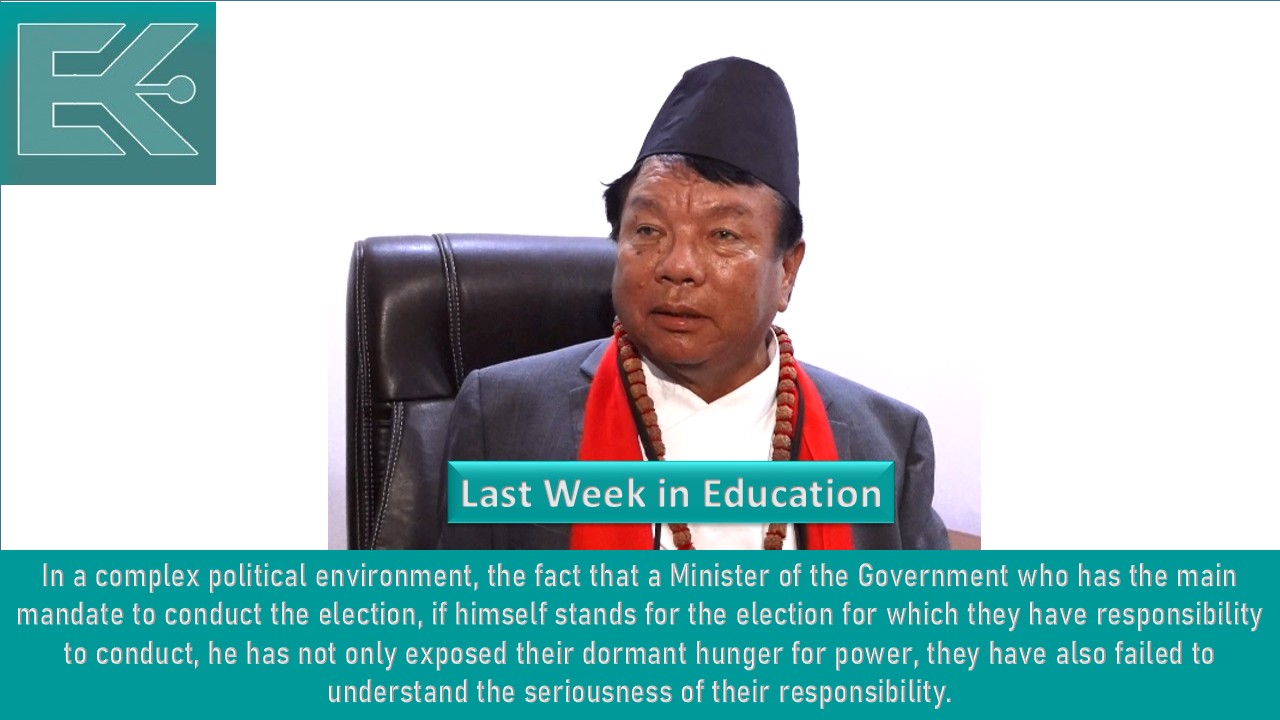
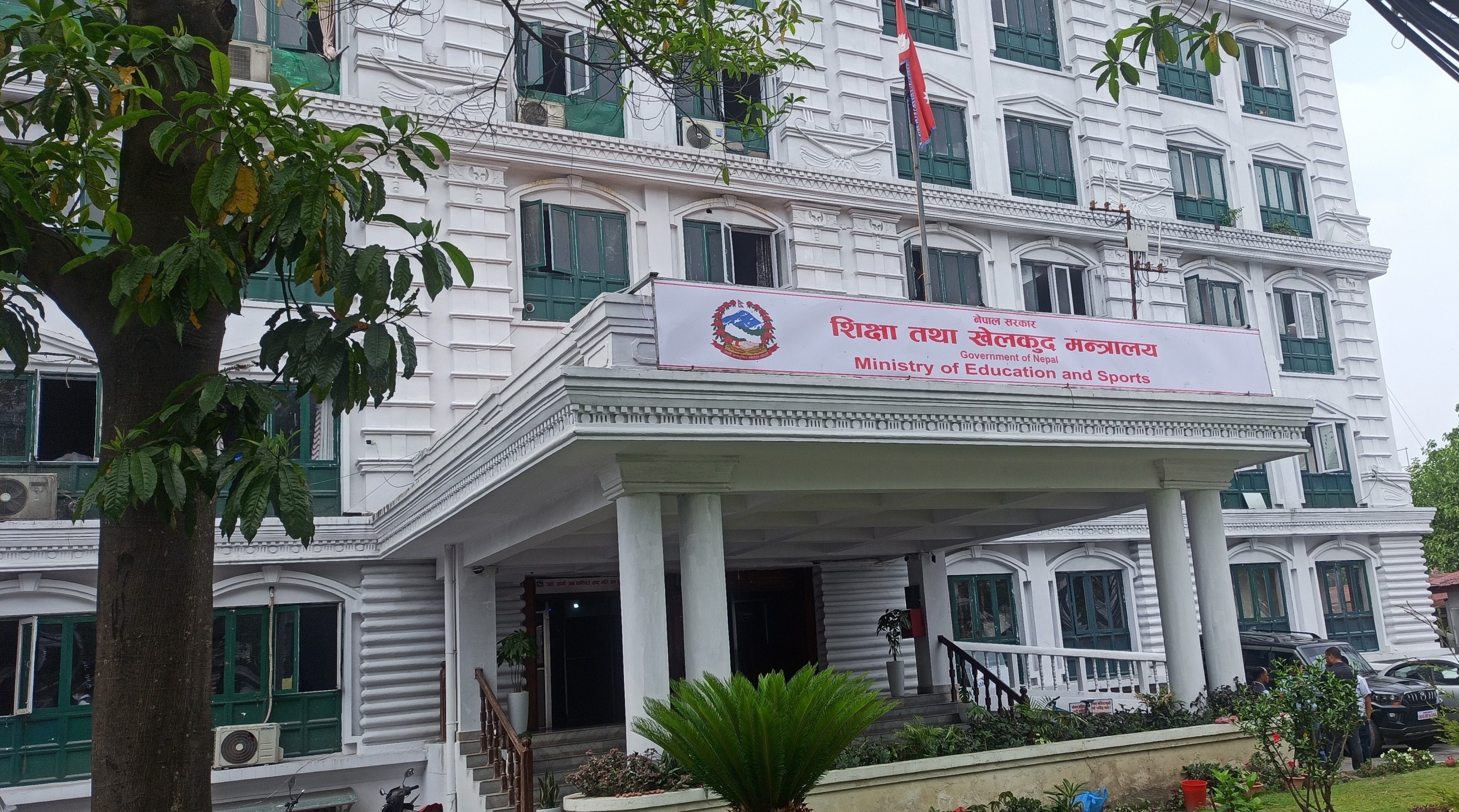
Kathmandu – After the Prime Minister dismissed the request of Minister Mahabir Pun to begin date of the enforcement of the Election Code of Conduct only after amending and passing the the drafts of various laws and amending regulations related to education by the Ministry of Education, Science and Technology (MoEST) sent to the Prime Minister's Office, Mr. Pun himself decided to contest the election, Onlinekhabar news portal wrote.
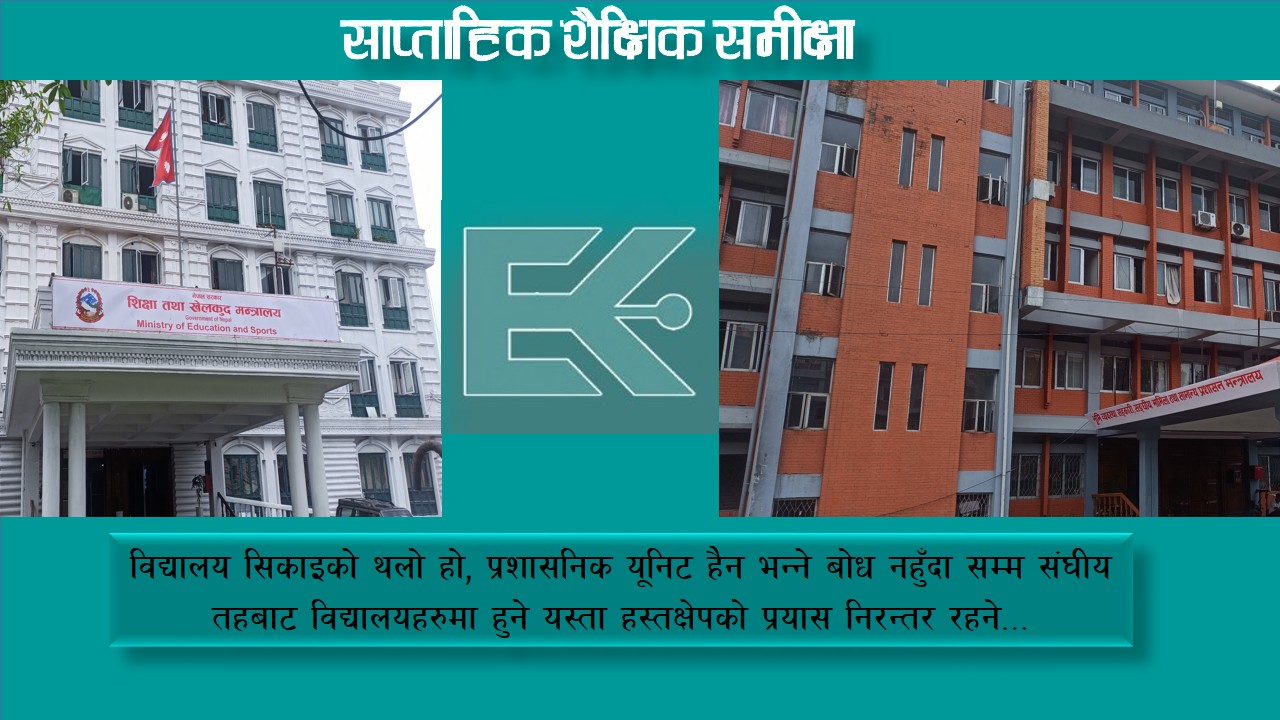
The MoEST had drafted the Education Regulations, Educational Counseling and Language Teaching Regulations, the Research and Innovation Fund Act and the Umbrella Act on Universities where the Prime Minister would not be the ex-officio Chancellor of universities unlike now, with preparations to pass through the Council of Ministers and enact the Acts through an Ordinance, the Gorakhapatra Daily wrote.
He had been advocating for splitting the Ministry and creating a separate Ministry of Science and Technology. A proposal to amend the Education Regulations was prepared to improve the management of schools. According to the news, the proposed amendment to the Education Regulations included 24 topics related to school education. It was proposed that priority be given to the needs of the school instead of seniority in teacher transfers, and that the ward chairperson should not be allowed to serve as the chairperson of the School Management Committee (SMC).
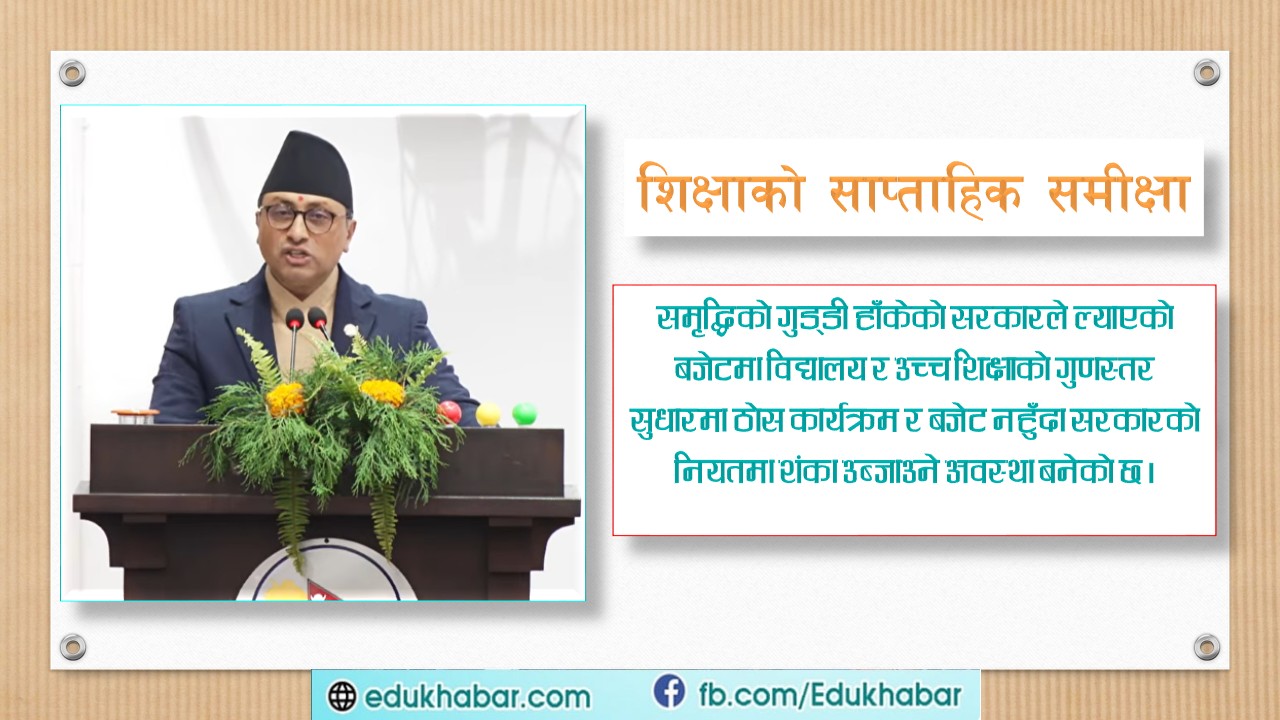
Since the Prime Minister refused to move forward with his proposal, Pun resigned from his ministerial post and became a candidate of the Member of House of Representative in Myagdi district. After the Education Minister resigned and the Election Code of Conduct came into effect, all initiatives taken by the MoEST to introduce various laws and amend regulations have been postponed for now, the news mentioned.
In the interim government formed with the power of the Gen-Z uprising of September 8-9, Mr Mahabir Pun, who was 'selling his book', was 'suddenly' catapulted to the position of the Minister of Education (of Science and Technology) on September 22. The main mandate of this government is giving good governance including curbing corruption and holding elections for the House of Representatives now scheduled on March 5, 2025 and handing over the government to the new leadership that emerges from the election. However, it was not expected from a government formed with specific responsibilities to attempt to create laws that would have a long-term impact on education. Even if the minister feels like doing something meaningful while he is in the office, it was not appropriate to try to change the policy and the Act of the education that has a direct impact on individuals and the state, as the work was being done in a ‘narrow circle’ of the Ministry. It is well known that the education sector is not on the right track due to the friction between individuals and organizations who want to improve the policy framework for effective public education and those with vested interests in maintaining the power and ongoing profitability in education.
Especially in such times, it is desirable to adopt a transparent policy formulation process that involves discussion and ownership by all stakeholders in education. This is the job of an elected government. Minister Pun is probably aware of the tension within the cabinet. Minister Pun resigned and entered into the election fray.
It is good for anybody to get approved through elections. But in a complex political environment, the fact that a Minister of the Government who has the main mandate to conduct the election, if him/herself stands for the election for which they have responsibility to conduct, he/she has not only exposed their dormant hunger for power, they have also failed to understand the seriousness of their responsibility. Such individuals have also greatly diminished the Prime Minister's or her advisors who appoint ministers decision-making ability. Although he is not the only one (fourth one so far!) to do this, it is likely that such an act has tarnished his image more than anyone else's.
Although he has stood as an independent candidate, his morale was held high by the people than that of others for his simple life and dedication to public good. Perhaps, without party affiliation, he could have made the issues he wanted to raise as an election issue.
One of the major problems with our education system is that there is a cartel of parties for beneficial appointments but education is not a political issue. Neither the leaders vow for good education nor the ordinary people demand for it. Even if he couldn't make education an election issue, he could easily return back to his work. He is likely to be disappointed if he does not win the election. If he gets the responsibility again, he should build a good team that don't just say "yes" to what he says, but can also say "this is what he shouldn’t do"! Best wishes to his future.
It has been made public that 770,000 children between the ages of 5- 17 years are out of school across the country. According to the news, 50 percent of those children have never attended a school, while the remaining 50 percent have dropped out. The National Bureau of Statistics has revealed in its report 'Education and Inclusion in Nepal' from the National Census, 2078, mentioned the news. The highest number of children who do not attend school and drop out of school is seen in geographically remote districts and marginalized communities with low income levels. The Bureau pointed out that the tendency to drop out of school has increased significantly in the years after grade 5, the news quoted.
Under the fundamental right to education enshrined in Article 31 of the Nepal's Constitution, 2015, says that "every citizen shall have the right to receive compulsory and free education up to the Basic Level and free education up to the secondary level." Even though the government has formulated a National Education Policy, many Acts, Rules, Guidelines, and Procedures, the parents of every child studying in public schools in Nawalparasi district students are required to pay fees for admission, monthly tuition, examination, textbooks, etc. - there was the news. Due to the lack of sufficient investment and adequate number of teachers public schools, and compulsion of teaching in English medium that demand more money, schools are obliged to charge fees in the guise of donations or support, stated the news.
No work can be performed without resources and labor. Education also cannot be free. Rights and entitlements are not something that can be enforced just by putting them down on paper. Schools cannot run on their own without the government providing sufficient resources. The ‘betrayal’ of free education for is to be blamed. In reality, not everyone seeks or needs free education. Providing free education to everyone who can and cannot afford is not justified as taxation cannot function as an equalizer in the country like ours where population with taxable income is pretty small.
It is well known that more than 90 percent of the budget allocated by the government for school education goes to teachers' salaries. The amount given by the government to each school is woefully inadequate to run a school. The government has not yet designated an official who guarantees free education. Nor has any candidate, government, or party so far stated education as their priority. This was, in the words of an education activist professor, a "dishonesty in the guise of fairness towards the public" by the leaders and employees in charge of leading education at the time of scripting in the constitution. This – prohibiting to collect fees without giving adequate resources only benefited private schools and teachers who needed excuses not to take the responsibility.
Such practices still dominate policymaking. Currently, teachers “who are embarrassed for the gross failure in public schools" are under pressure to attract and retain enough students in their schools. Such efforts by them should be taken positively. Media professionals have also become accustomed to repeating the same cliché. This is not just a matter for Nawalparasi. This is the situation of almost all public schools that are said to be well-run. Let's take the initiative to elect a candidate who is committed to education and can fix unruly technocrats, instead of existing corrupt, irresponsible leaders.
Kantipur daily has published a special issue featuring inspiring stories of public schools. The feature discusses how the best public schools across the country are succeeding in providing quality education while competing with private schools. This includes the school's physical infrastructure, use of technology, and excellent student outcomes, as well as practical and skill-based education. The materials of success stories of 20 schools across the country. Kantipur has also published an editorial titled 'Affluent Infrastructure and Competent Teachers, the Rights of Every Student'.
It is commendable that Kantipur has brought the issue of public schools to the forefront. Education rarely gets such a priority. This is probably the first time such a thing has happened in the history of a Daily. However, it would have been more useful if these schools and their issues had also been presented together as a synthesis. The weak state of our public institutions is not just due to resources. It is because of the negligence of those who have to take care of public schools who don't have to send their children to these schools. This has not been an important political issue. In this sense, lack of analysis despite such high profiling of the issue is also a missed opportunity for Kantipur and media professionals working in education. In any case, this effort has encouraged those schools – teachers and other people to make it a success story. Kantipur should continue such work and make more analytical. There is a need and an opportunity for Kantipur to make education an election issue. May it continue to shoulder such a historical responsibility further.
Students, teachers and parents were crying as they bid farewell to Mr Bhojraj Aryal and Ms Sita Lamichhane (Aryal), teachers who retired from Swachhanda Bhairav Secondary School in Chitlang, Thaha Municipality, Makawanpur. It is extremely painful to bid farewell to people who have served the school for four decades’, Setopati news portal quoted the School Management Committee Advisor Ramkrishna Basnet in the news.
Himalaya Basic School in Thakurbaba Municipality, Bardiya, has arranged a separate room for female students to rest during their menstruation periods, the news published. A rest room was assigned at the school after the Adolescent Sexual and Reproductive Health Project, run by the Radhakrishna Tharu Janasewa Kendra Bardiya, provided necessary materials, the news mentioned. According to the news, to ensure that girls do not have to miss their studies during menstruation, they have started installing restrooms in schools of the most municipalities in Bardiya.
Kaparfori Secondary School in Ratnanagar Municipality, Chitwan, has succeeded in improving quality by using technology in teaching and learning. It has succeeded in achieving 75 percent results by solving the problem of students from disadvantaged and poor communities who cannot even afford to buy notebooks, pens, or clothes coming to school hungry, the report published.
The School Education Examination (SEE) is scheduled to be held from April 2 to 12, 2025. Although it was supposed to be in the last week of March according to the academic calendar, it was postponed due to the elections, quoted the news.
Harina Ukheda of Raruk, Bungal Municipality, Bajhang, has resumed her studies that was interrupted for marriage, after her children started going to school. She, a Dalit lady, studied up to 8th grade stopped her studies after getting married at the age of 14! She is now continuing her studies, the news mentioned.
Students from the Dalit community have been studying Sanskrit for 39 years at Saraswati Sanskrit Secondary School, the leading Sanskrit language school in the Far Western Province. But Dalit students, who have been studying Sanskrit since 1987, have not received any encouragement from anywhere in terms of scholarships and uniforms, mentioned the news. Every year, 20 to 30 students studying Sanskrit at Saraswati Sanskrit Secondary School in Dasharathchand Municipality, Nakatdi, are from the Dalit community. (Traditionally, the dalits were forbidden to study Sanskrit – the language of the gods – Ed)
Tribhuvan University (TU) officials have been barred Vice-Chancellor Deepak Aryal, Rector Khadak KC, and Registrar Kedar Prasad Rijal from entering the university, citing that the demands of the Nepali Communist Party (NCP) affiliated student organization regarding the reduction of fees have not been met. As daily activities began to be affected, the Executive Council of TU formed a high-level Task Force on Fee Review under the coordination of the Assistant Dean of the Faculty of Management, Prof. Dr. Dilip Parajuli, and has begun work and the organization has open the lock, there was the news. The task force has been mandated to study all types of fees charged by all institutions, affiliated campuses within three months and recommend procedures to make them timely and uniform, mentioned the news. The organization had locked the offices of all three officials on December 18.
A team of 8-9 people led by Amrit Campus (ASCAL) Free Students Union (FSU) Secretary Gopal Bahadur Shahi vandalized the Dean's office of the Faculty of Science and Technology, Tribhuvan University, Kantipur published the news.
NCP affiliated student organisation have hoisted a black banner at Thapathali's accusing 'The British College' for taking students to Dubai as interns and leaving them stranded, accusing the school of charging exorbitant fees for admissions and tuition, engaging in human trafficking, and tax evasion, the news published. According to the news, black banners have also been symbolically hung at colleges including Presidential College in Thapagaun, Software College and Lord Buddha College in Maitidevi, Islington College in Kamalpokhari, and ISMT College in Tinkune.
These irresponsible, nominally-limited left-wing student organizations have yet to wake up. They don't care about the situation where a student in a class has to drop out of school because they can't pay the fees. They are so fond of higher education students who can afford to pay for their education abroad, not just in their own country! This is not to say that doing so is bad. This is a matter that concerns the police, not the student organization. It is understood that police took the case and is investigating.
An Editorial titled "Peace in the Educational Sector" has been published in Gorkhapatra. The editorial states that the educational sector should remain ‘calm’ by stopping creating confusion and spoiling the environment of election while the interim government is making all preparations for the elections.
Under the title of University as a Center of Innovation, Devi Prasad Acharya wrote that universities should not be a place of political participation, but should be made a center of intellectual, autonomous, research, and innovation.
The pace of achieving literacy goals in Madhesh Province has been slow, as a result, it is necessary to identify the reasons for not being able to declare a literate region on time like other districts and provinces and prepare a concrete action plan to declare a literate province within the current fiscal year, Education Minister Mahabir Pun had formed a seven-member task force under the coordination of former Secretary Dr. Ramswaroop Sinha (two weeks before his resignation - Ed), published the news. The task force includes former Joint Secretary Dr. Kamlesh Kumar Sinha, former Joint Secretary Dr. Gyani Yadav, former Head Teacher Dr. Surendranath Tiwari, former Deputy Secretary Uttar Kumar Parajuli, and former Deputy Secretary Kumari Ambika Shah, mentioned the news.
The Australian Department of Education has tightened visa screening procedures for students from India, Bangladesh, Bhuta and Nepal. Australia has enforced a new policy from January 8, 2026, and has also lowered the level of countries at risk, including Nepal. The news reported that Nepal's risk level has been increased from level 2 to 3.
Stating that the role of the state alone cannot bring about transformation in education, teachers also need to transform, and teachers should not only teach textbooks but also play the role of companions, guides, and motivators of learning, the letter to the Editor wrote by Chintamani Rijal published in Gorkhapatra.
Madhesh Province Assembly Speaker Ram Ashish Yadav has pointed out the need to move forward the current education system by linking it with culture, ethics, and quality. Stating that the culture of respect for society is weakening in the recent generation, he expressed the view that education should not be limited to just knowledge from books but should be made useful in life, quoted the news.
A comprehensive discussion was held among stakeholders in Itahari on practical measures to include children with disabilities, students with linguistic and cultural diversity, and children from socially disadvantaged communities in inclusive education, there was the news.
Kathmandu University has launched a Master's program in Film Studies for the first time in Nepal. The Department of Language and Mass Communication under the University's School of Arts is about to launch a 'Master in Film Studies' program, the news came.
Pokhara Metropolitan City Mayor Dhan Raj Acharya said that the metropolis provides some incentive to the head teachers, believing that the quality of schools will improve when head teachers provide good leadership, the news published.
Purpose of this news review is to classify and synthesize the educational content of the week and provide objective comments from the point of view of social justice and creative pedagogy including the environment. It is aimed to the policy makers and stakeholders to help make informed decisions. In this joint effort of the Center for Educational Policies and Practices (CEPP) and EduKhabar, material from daily newspapers - Kantipur, Gorkhapatra and The Himalayan Times, online news portals - Online Khabar, Setopati and Ratopati and the 8 o'clock news of Nepal Television and 7 o'clock news of Himalaya Television is summarized and presented with commentary on relevant issues. We have covered contents of two weeks from Jan 10-23, 2025 in this issue and this often is the translated version of Nepali edition - The Editor.
Read this analysis in Nepali : अन्ततः शिक्षा मन्त्री पनि भागे !
अझै १० प्रतिशत बालबालिका विद्यालय बाहिरै !
Read last week's content : Last week in Education



प्रतिक्रिया