 मंगलबार, १६ भदौ २०८३
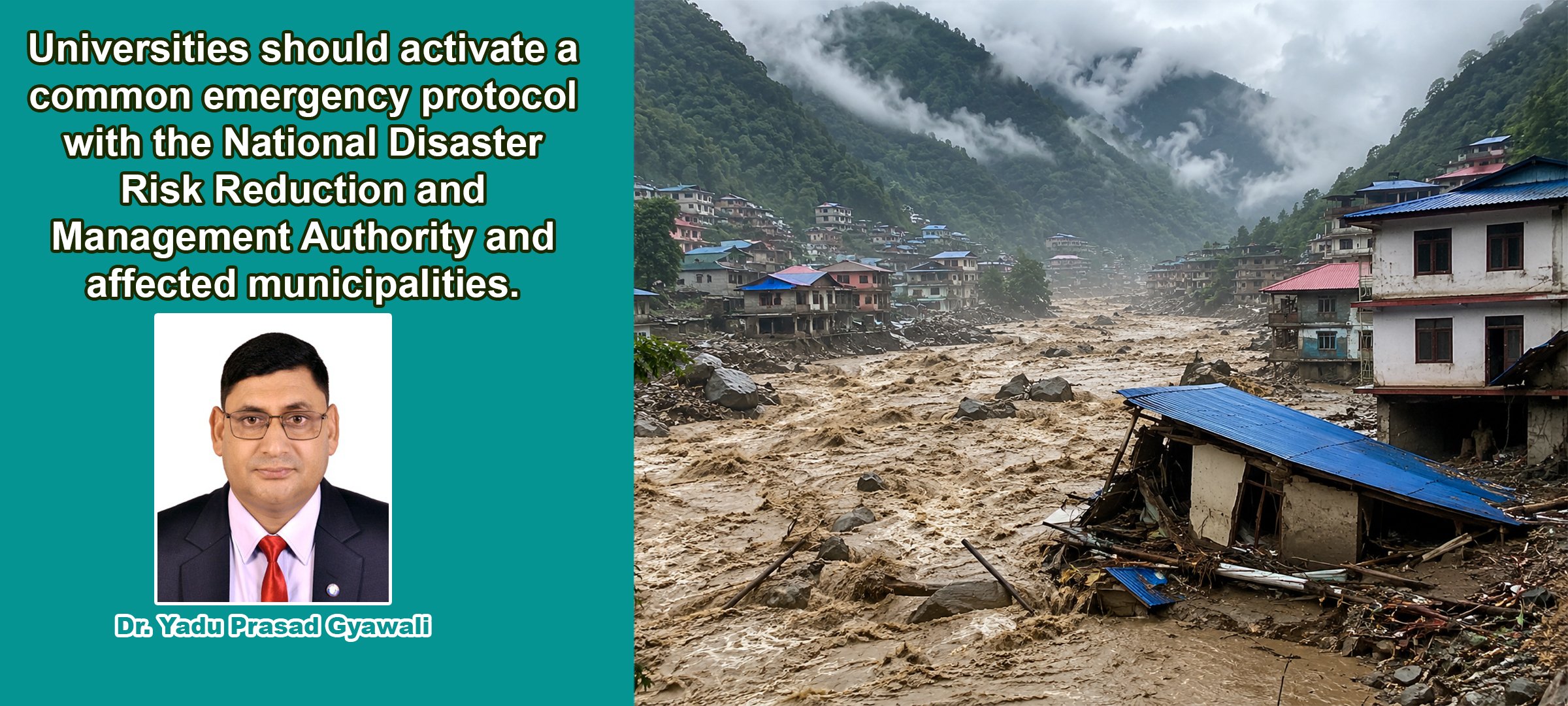
Fourteen minutes; that was the warning available at Tribhuvan Trishuli Secondary School in Bidur as the August 26 flood rushed downstream. More than 900 students and 16 faculty members escaped before the school was destroyed. Their survival depended on a telephone call from upstream, a head teacher who acted immediately, staff who knew where to move children, and buses that reached higher ground in time. It is an extraordinary story of courage. It is also an indictment of a system in which a life-saving warning still travels mainly by personal luck.
The Kyirong-Rasuwa disaster has devastated communities and damaged roads, bridges, hydropower sites and learning facilities across the Bhote Koshi-Trishuli corridor. Rescue operations continue, and a full explanation of the event will require careful scientific assessment. Early evidence points to glacier instability. The broader direction, however, is already clear: a warming Himalayan cryosphere, unstable slopes, intense rainfall, unplanned construction and vulnerable river settlements are combining to create cascading risks that do not respect district or national borders.
Nepal cannot respond to this new geography of danger through security agencies and local governments alone. Its universities must be recognised as part of the country's essential resilience infrastructure. They house laboratories and hospitals, and employ engineers, public health specialists, teachers, counsellors, social scientists, geographers, information technologists and thousands of energetic students. Yet after most disasters, higher education institutions remain peripheral: they collect donations, postpone examinations and wait for normality to return. Normality is precisely what climate change is taking away.
Universities as emergency infrastructure
The first responsibility is immediate and practical. Universities should activate a common emergency protocol with the National Disaster Risk Reduction and Management Authority and affected municipalities. Safe campuses can provide temporary shelter, charging points, clean water, communications, storage and spaces for children to continue learning. Medical, nursing, engineering, public health, social work and psychology teams can support official operations, but only after training, registration and deployment under a clear command structure. Uncoordinated student enthusiasm must never put volunteers or survivors at further risk.
Universities must also protect their learners. A flood can destroy a student's home, income, laptop, certificates and ability to travel in a single night. Institutions should immediately offer emergency grants, fee and deadline flexibility, temporary accommodation, replacement of academic records, low-bandwidth learning options and alternative assessments. Counselling and psychosocial first aid should be available to students, staff and affected families. These are not acts of charity; they are measures to prevent a climate disaster from becoming an educational dropout crisis.
Recovery must be evidence-led
The second responsibility begins when the water recedes. Within 30 days, Nepal's universities should establish a multidisciplinary Post-Flood Recovery Observatory. Its task would be to combine satellite imagery with field evidence on damaged settlements, unsafe buildings, water quality, public health, interrupted schooling, displacement and lost livelihoods. Findings should be shared openly, quickly and in Nepali and relevant local languages, while safeguarding personal data. Communities should not be treated merely as research subjects; they must help define the questions and receive the results in forms they can use.
This evidence should guide reconstruction. Rebuilding the same structure in the same hazardous location is not recovery; it reproduces risk. Engineering and architecture faculties can help municipalities assess sites and design safer, accessible schools, health posts and housing. Environmental scientists can advise on drainage, wetlands, river corridors, slope restoration and other nature-based protections. Education departments can organise bridge learning for displaced children and train teachers in trauma-sensitive classrooms. Law and public policy faculties can examine land-use decisions, compensation and the accountability of infrastructure projects. Economists and management schools can help small enterprises and farming families restart without falling into predatory debt.
Every university should conduct a multi-hazard audit covering floods, landslides, earthquakes, fire, heat, water scarcity and access failure.
Climate readiness belongs in every degree
The third responsibility is long-term transformation. Climate and disaster literacy should be a graduate capability across every degree, not an optional course confined to environmental science. A civil engineer should understand flood return periods and cascading failures. A teacher should be able to conduct an evacuation and sustain learning after displacement. A doctor should anticipate waterborne disease, heat stress and disrupted supply chains. A journalist should interpret uncertainty without spreading panic. A business graduate should understand continuity planning, climate disclosure and the risks embedded in investment decisions.
Campuses must meet the standards they teach. Every university should conduct a multi-hazard audit covering floods, landslides, earthquakes, fire, heat, water scarcity and access failure.
Each campus needs mapped evacuation routes, trained incident teams, annual drills, accessible warnings, backed-up student records, redundant power and communications, and a tested plan to continue classes. Nepal's University Grants Commission can make such plans a condition of accreditation and capital funding, with additional support for institutions serving remote and poorer regions.
Build a Himalayan knowledge network
No country can understand Himalayan risk alone. Nepal should lead the creation of a Himalayan University Resilience Network (HURN) linking institutions in Nepal, India, Bhutan, Bangladesh and China. The network could share river-basin and cryosphere data, develop open-source risk maps, conduct joint field schools, agree on ethical standards for disaster research, and train the next generation of mountain-risk professionals. The August flood has again shown that an upstream hazard can become a downstream catastrophe within minutes. Cross-border data sharing is therefore not academic courtesy; it is life-saving infrastructure.
Universities must also be willing to speak independently. Hydropower, roads, tourism, urban expansion and other development are vital to Nepal, but poorly sited or weakly regulated projects can increase exposure. Scholars should evaluate these investments before approval, monitor them after construction, and communicate uncomfortable findings without political or commercial pressure. A university that produces technical talent but remains silent about unsafe development has fulfilled only half its public duty.
Fund resilience and measure results
This agenda needs funding and accountability. Government, the University Grants Commission and development partners should establish competitive Himalayan resilience grants for applied research, campus preparedness and community partnerships. Funding should reward collaboration across disciplines and institutions, not isolated reports that disappear onto shelves. Progress should be measured through public indicators: warning coverage, evacuation time, learning days restored, campuses audited, local responders trained and reconstruction decisions changed by evidence.
The Sendai Framework calls recovery an opportunity to build back better. For Nepal, universities can make that phrase real. They can turn knowledge into warnings, campuses into safe civic spaces, students into trained partners, and reconstruction into prevention. The next Himalayan emergency may arrive as a flood, a landslide, an earthquake, a wildfire, a heatwave, or a compound disaster we have not yet named. If universities begin their work only after the sirens sound, they will already be late. Their task is to help the country hear the danger sooner, recover more fairly, and build differently before the next river rises.
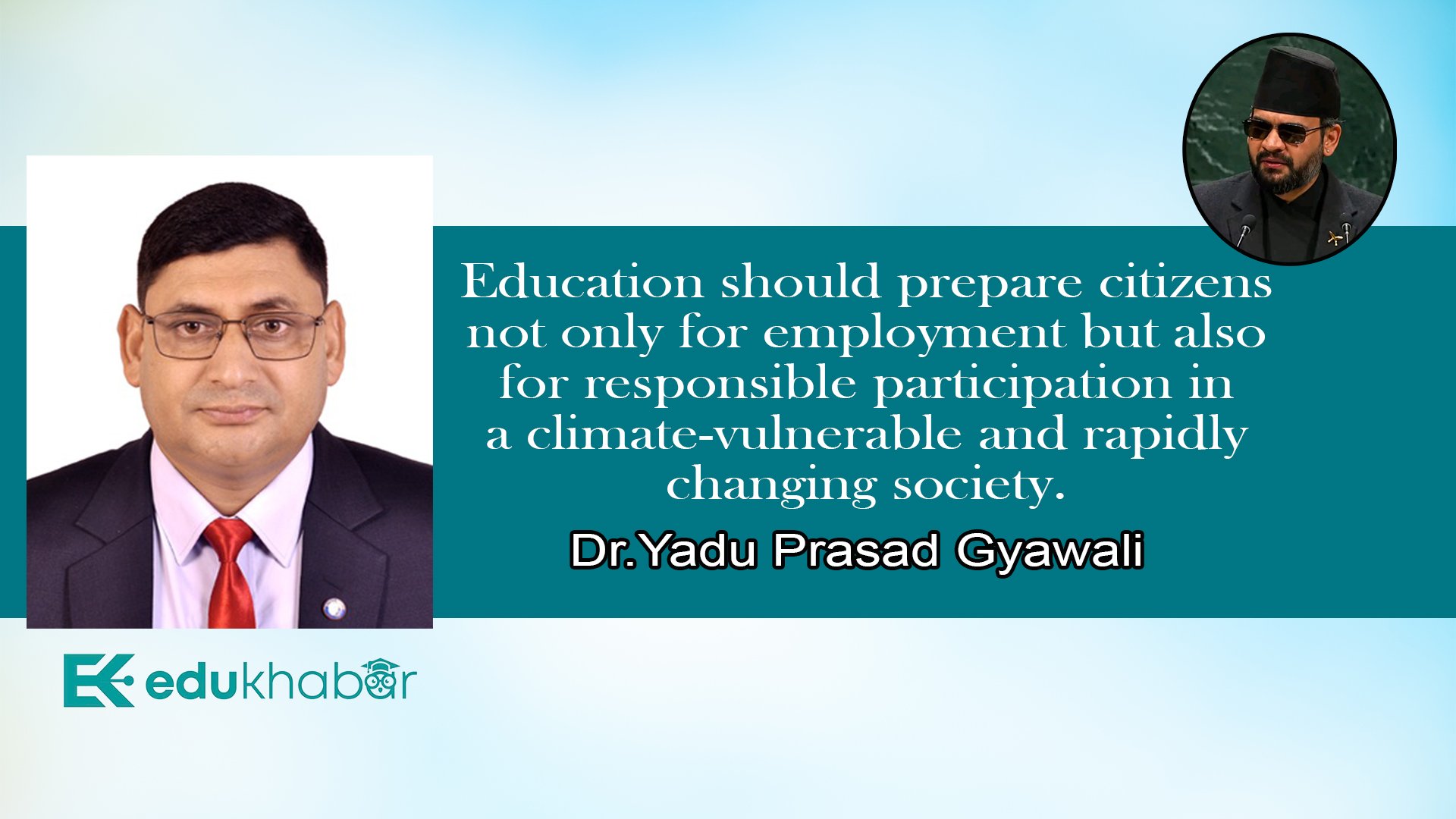
Gyawali is the Executive Director at the Directorate of International Relations, Mid-West University, Nepal.
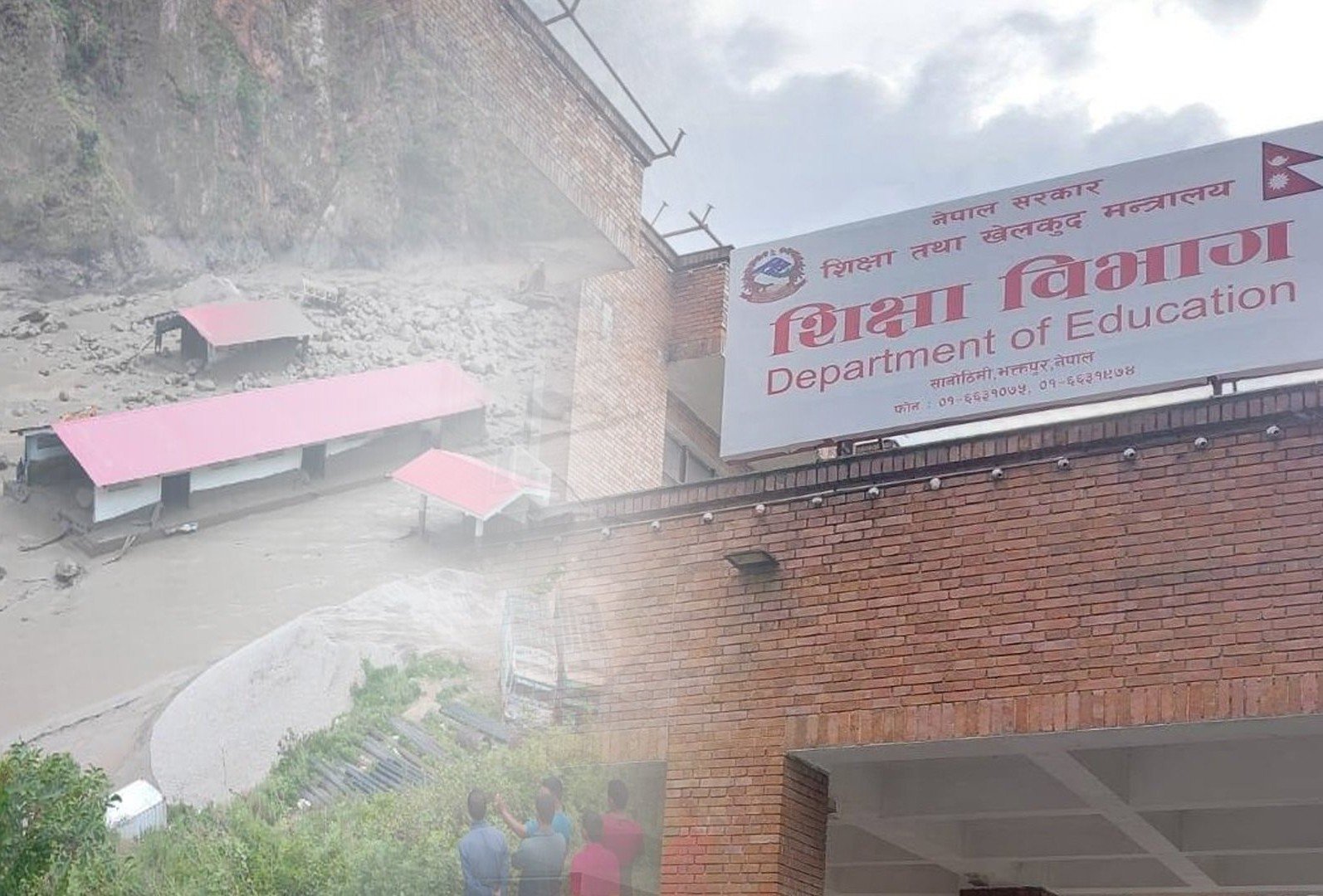
Flood photo AI-generated





प्रतिक्रिया